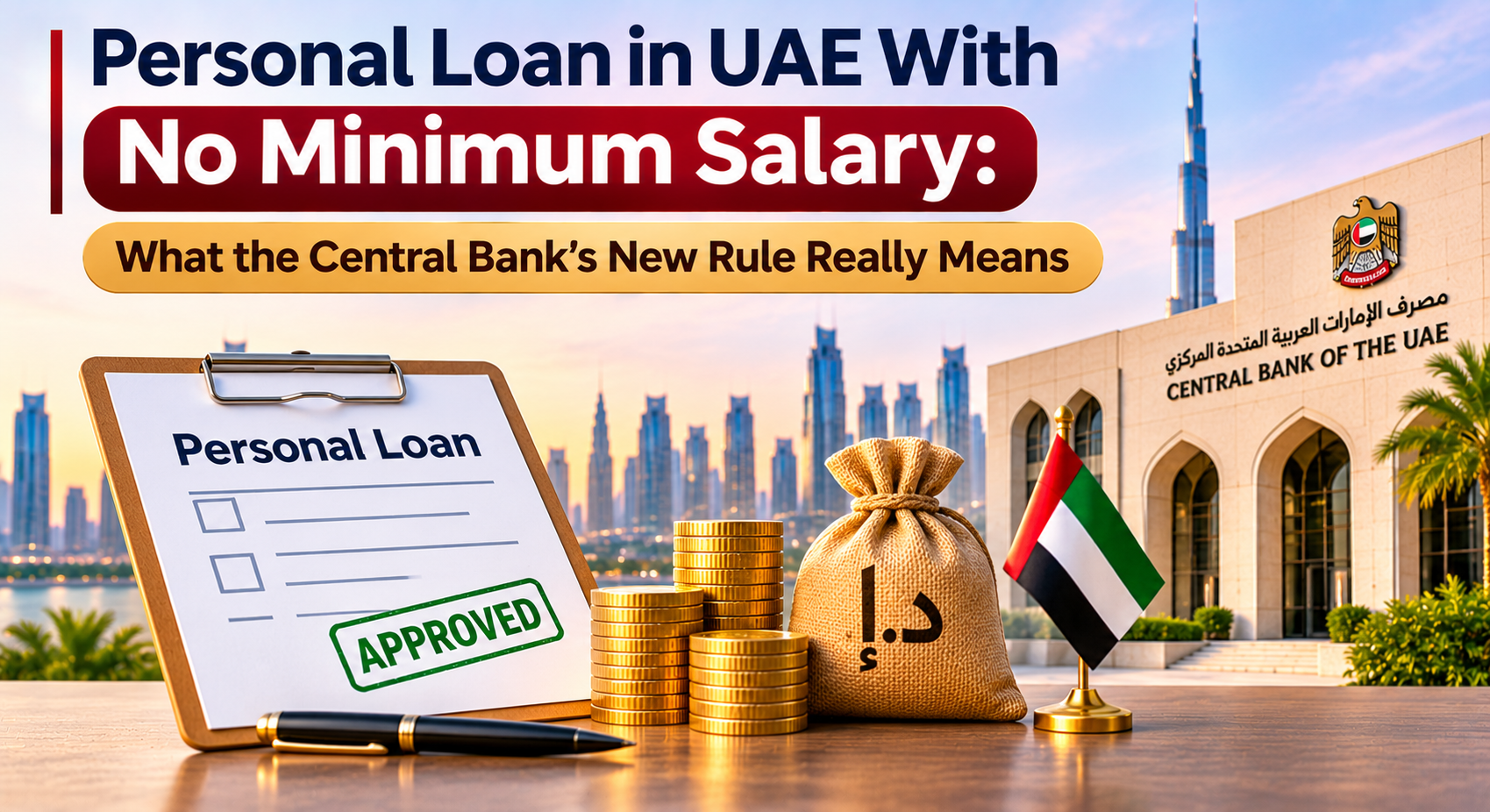
Is a personal loan in UAE with no minimum salary really possible? In November 2025, the Central Bank of the UAE told banks to scrap the long-standing minimum salary rule for personal loans, which had sat at around AED 5,000 at most lenders. For millions of residents earning less than that, it sounded like the door had finally opened. The reality is more nuanced. This guide explains what the new rule changes, what it does not, and how to improve your chances if you earn a lower salary.
Quick answer
Banks can now approve personal loans below the old AED 5,000 salary floor, but each bank sets its own minimum, and strict limits on loan size, repayment period and debt burden still apply. A lower salary no longer rules you out automatically, but it does not guarantee approval either.
Key takeaways
- The Central Bank removed the AED 5,000 minimum salary requirement. Banks now set their own criteria.
- The maximum loan is 20 times your monthly salary, repayment is capped at 48 months, and instalments cannot exceed 50% of your income.
- Some banks still list AED 5,000 or more as their minimum, so check before you apply.
- Borrow only for real needs. A missed payment can lead to default even if you lose your job.
What Did the Central Bank Change?
In November 2025, the Central Bank of the UAE (CBUAE) instructed banks to abolish the minimum salary requirement for personal loans, a threshold that had typically been set at AED 5,000 across most banks. Under the directive, each bank decides its own salary criteria based on its internal risk policies.
The aim is financial inclusion. The change is meant to let more residents, including young people, lower-income earners and labour-sector workers, open regulated bank accounts linked to the Wage Protection System (WPS). That lets banks deduct instalments automatically when salaries are paid. Khaleej Times reported that a significant share of the UAE’s employed population earns below AED 5,000 a month, so the change could widen access to formal credit for many people and steer them away from informal lenders.
What the Rule Does Not Change: The Limits That Still Apply
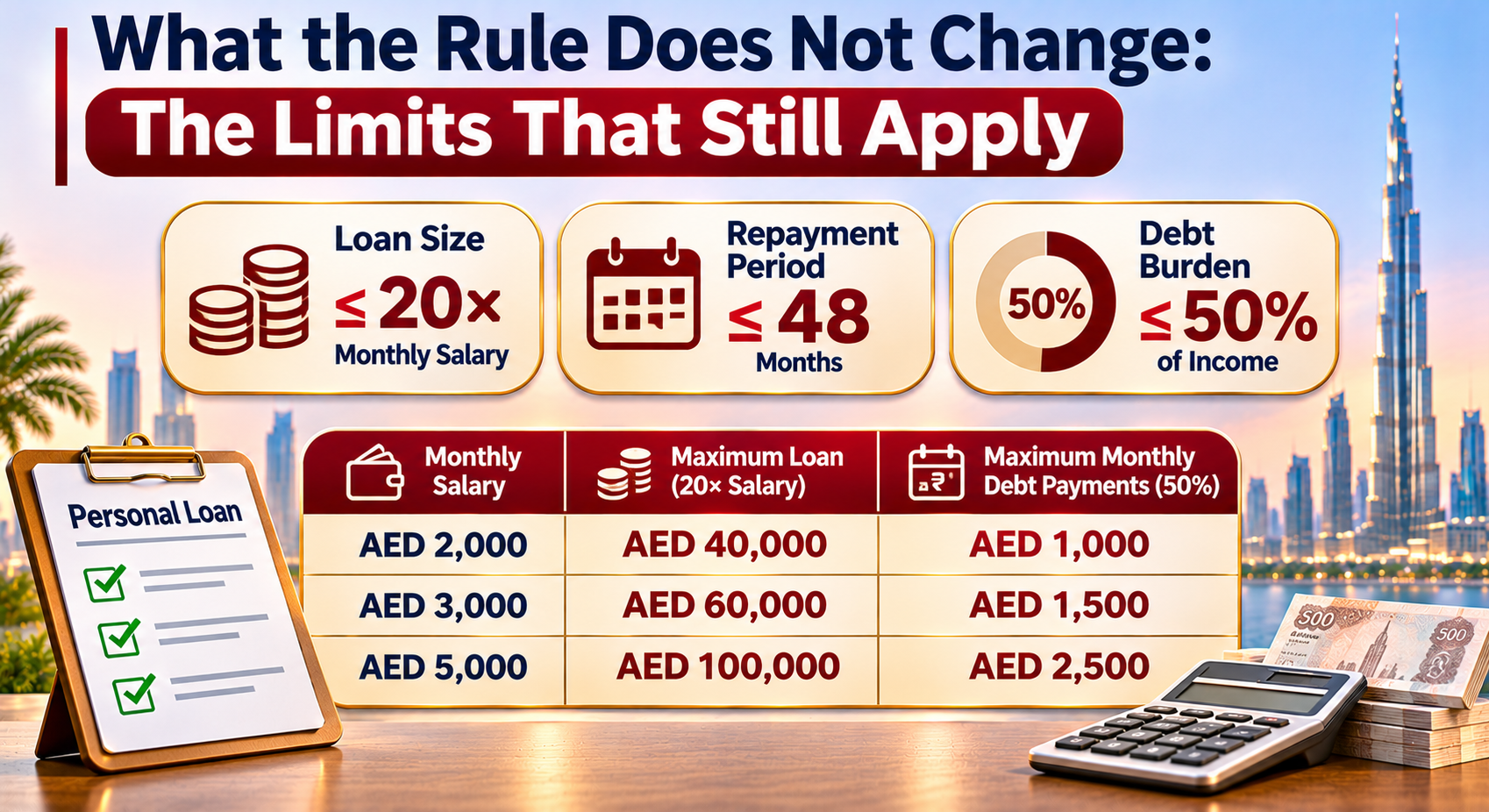
The removal of the salary floor did not remove the consumer-protection limits. These still apply to every personal loan:
- Loan size: no more than 20 times your monthly salary.
- Repayment period: no longer than 48 months.
- Debt burden: your total monthly instalments cannot exceed 50% of your income.
Here is what those limits mean at different salary levels. These are maximums, not guaranteed offers.
| Monthly salary | Maximum loan (20 times salary) | Maximum total monthly debt payments (50%) |
| AED 2,000 | AED 40,000 | AED 1,000 |
| AED 3,000 | AED 60,000 | AED 1,500 |
| AED 5,000 | AED 100,000 | AED 2,500 |
The 50% limit includes all your existing instalments, such as a car loan or credit card payments, not just the new loan. For example, if you earn AED 3,000 and already pay AED 400 a month on a credit card, at most AED 1,100 a month is left for a new loan. A bank can approve less than the maximum, or decline you altogether, after its own affordability and credit checks.
Can You Get a Personal Loan in UAE With No Minimum Salary? What Banks Still Look At
A personal loan in UAE with no minimum salary does not mean banks will lend to everyone. Because each bank now sets its own rules, requirements vary. According to Khaleej Times, some banks still list a minimum of AED 5,000 or more on their websites, and the chairman of the UAE Banks Federation has said not everyone will qualify, particularly those on very low incomes.
When you apply, most banks look at:
- Your salary and how it is paid. A salary transfer or WPS-linked account often makes approval easier because the bank can see your income and collect instalments directly.
- Your employer. Approved or well-established companies are usually viewed more favourably.
- Your credit report. Banks check your Al Etihad Credit Bureau (AECB) record. Read our guide on the minimum credit score for a loan in UAE.
- Your existing debts. Credit cards, car loans and other instalments reduce what you can borrow.
- Your age and residency. Most banks require applicants to be at least 21 and to hold a valid UAE residence visa and Emirates ID.
To see where you stand, use our guide to personal loan eligibility in UAE. If your income is on the lower side, our guide to a personal loan on a AED 2,000 salary covers what to expect.
Common Myths About a Personal Loan in UAE With No Minimum Salary
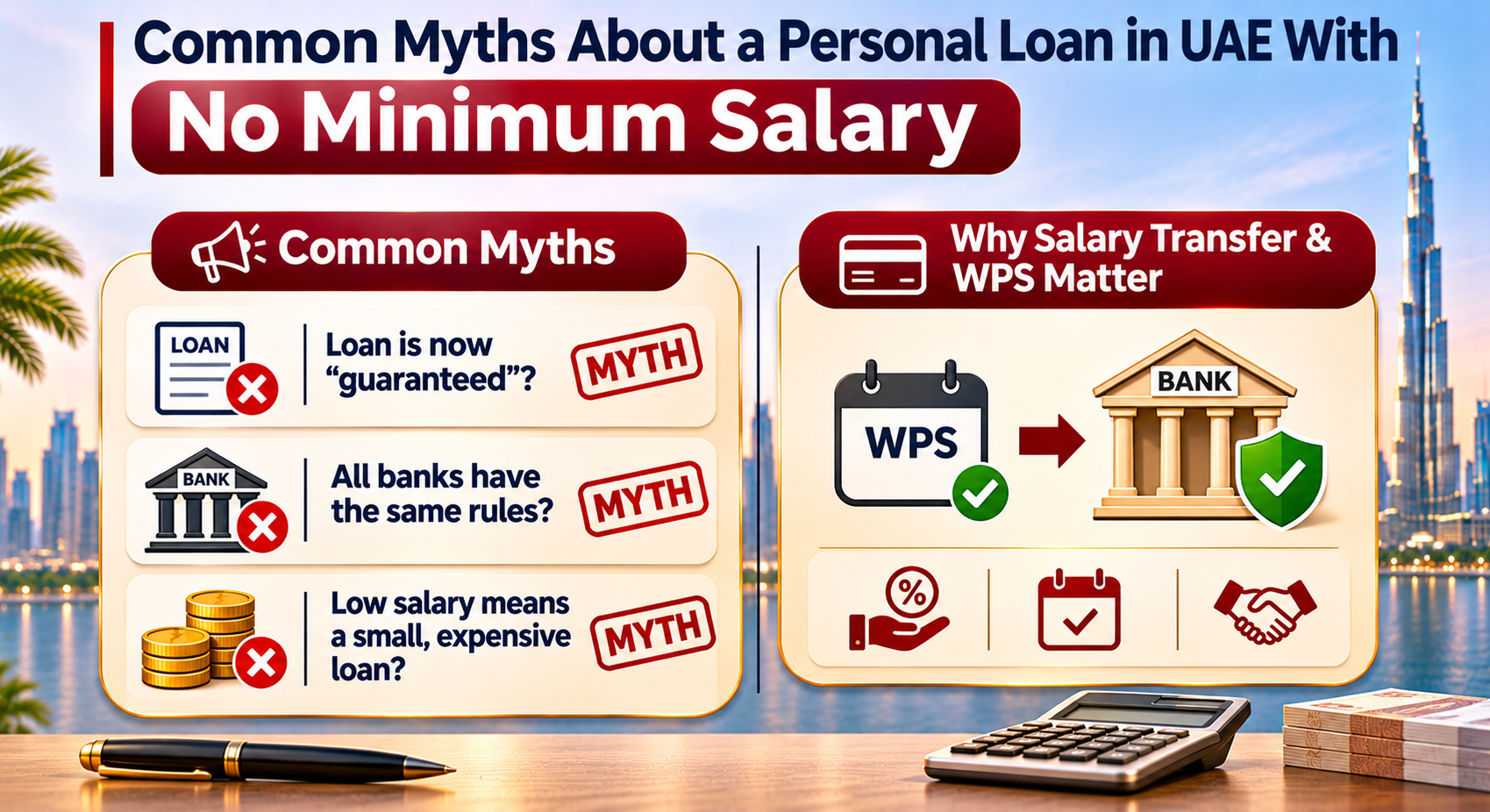
Myth: a personal loan in UAE with no minimum salary is now guaranteed. It is not. Removing the Central Bank floor lets banks consider lower earners, but they can still decline you.
Myth: every bank has the same rules now. They do not. Each bank sets its own minimum and its own checks, so one lender may approve what another refuses.
Myth: a low salary means a small, expensive loan. Your loan size depends on your salary, your debts and your credit record, and the cap is 20 times your monthly salary. Pricing varies by bank, so compare offers rather than assume.
Why Salary Transfer and the Wage Protection System Matter
The Wage Protection System (WPS) is the system that records salary payments to employees. Under the new directive, accounts linked to the WPS allow banks to deduct instalments automatically as soon as wages arrive. That lowers the bank’s risk, which is one reason lenders can consider lower salaries. It also means your instalment leaves your account before you can spend the money, so budget for it from the first day.
Who Benefits Most From the New Rule?
A personal loan in UAE with no minimum salary matters most for first-time borrowers, young professionals, and people on lower salaries who were shut out when a fixed AED 5,000 floor applied. It also gives these borrowers a way to build a repayment record. Over time, that history can help them qualify for larger products such as car loans and home finance.
Analysts expect banks to respond with new products for this segment, such as small loans and entry-level credit. That is a forecast, not a promise, and it will take time. For now, the practical benefit is that a lower salary is judged case by case instead of being rejected at the door.
Costs and Risks to Understand Before You Borrow
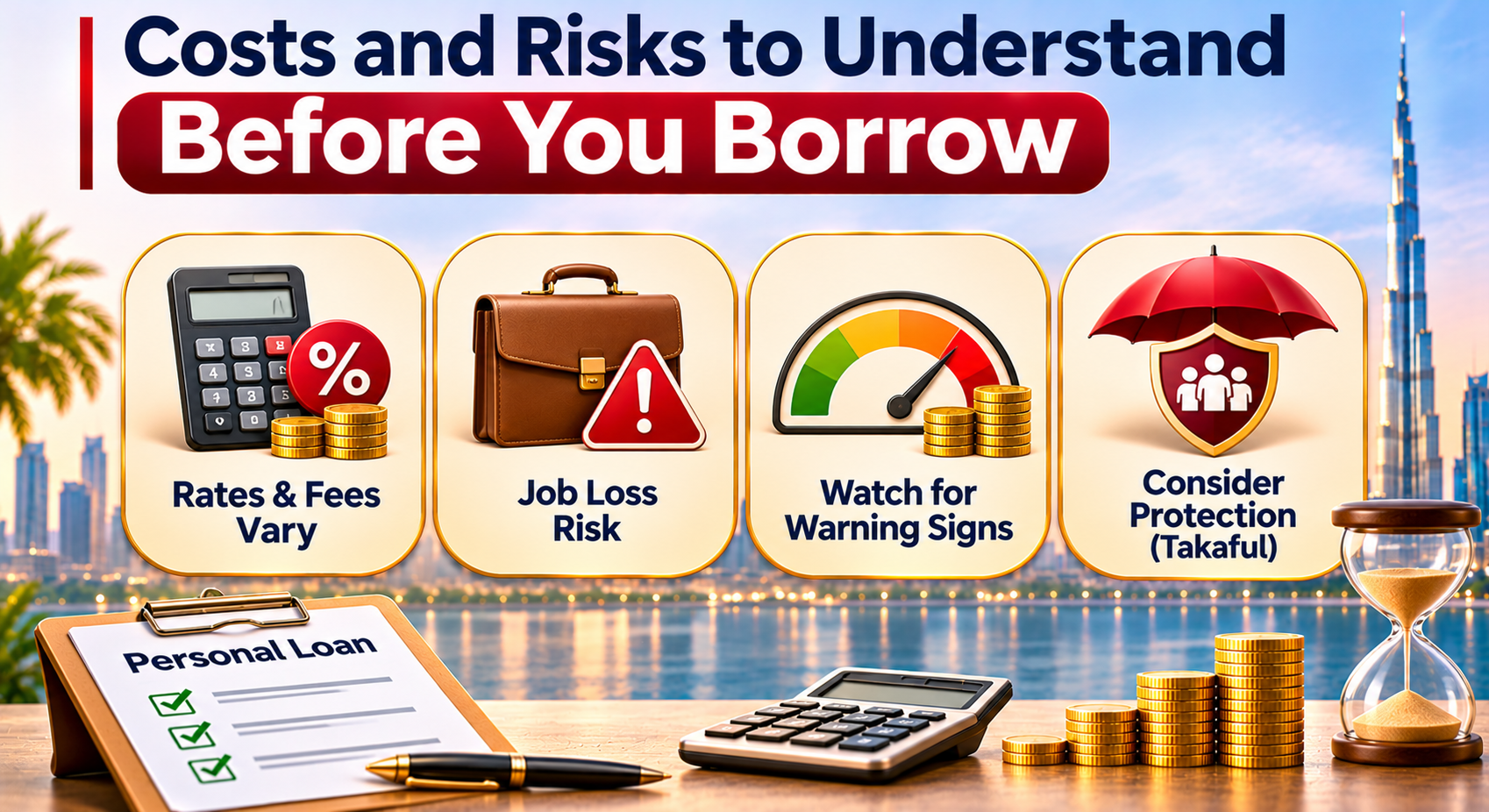
Easier access also means more responsibility. Before you take a personal loan in UAE with no minimum salary, keep these points in mind:
- Rates and fees vary. Compare the effective interest rate, processing fees and any early settlement charges, not just the monthly instalment. Most UAE personal loans are fixed-rate, so see our guide to the UAE interest rate hike for how rates affect borrowers.
- Job loss is a real risk. UAE banks are not obliged to suspend instalments if you become unemployed. Unless you agree a restructuring plan, missed payments can lead to default procedures.
- Know the warning signs. Gulf News quotes an adviser who points to repayments approaching 30% to 50% of income, relying on short-term credit rollovers, and using cash advances to meet repayment deadlines.
- Consider protection. One consultant quoted by Khaleej Times suggests takaful cover alongside a loan in case of job loss.
Experts advise taking personal loans only for essential needs, emergencies or well-considered investments. Use our EMI calculator to check what a loan would cost each month before you apply.
How to Improve Your Chances of Approval
If you are applying on a lower salary, these steps can help.
- Check each bank’s requirements first. Minimums differ, so apply only where you meet the criteria.
- Move your salary. If you can transfer your salary to the lending bank, you may improve your odds.
- Check your credit report. Fix errors and clear overdue payments before you apply.
- Reduce existing debts. Paying down cards and loans frees up room under the 50% limit.
- Ask for a realistic amount. A smaller loan or shorter term is easier to approve than your maximum.
- Apply to a short list of lenders. Many applications in a short time can show on your credit report.
- Use licensed lenders only. Make sure any lender is regulated by the Central Bank of the UAE.
Get Expert Help With Your Personal Loan
Choosing the right bank matters more now that every lender sets its own rules, especially if you are applying for a personal loan in UAE with no minimum salary. Loan Market can compare personal loan options across UAE banks and match them to your income and credit profile. Explore our personal loan in UAE service or contact us to get started.
Frequently Asked Questions
Q1. Is there a minimum salary for a personal loan in the UAE?
There is no longer a Central Bank minimum. Each bank now sets its own, and some still list AED 5,000 or more, so check before you apply.
Q2. Can I get a personal loan in UAE with no minimum salary?
Possibly. A lower salary no longer rules you out automatically, but banks still assess your income, employer, credit report and debts before approving.
Q3. Can I get a personal loan on a AED 3,000 salary?
It depends on the bank. The maximum would be AED 60,000, and your total monthly debt payments could not exceed AED 1,500.
Q4. What is the maximum personal loan I can get in the UAE?
Up to 20 times your monthly salary, subject to the bank’s approval. For example, a AED 5,000 salary caps the loan at AED 100,000.
Q5. What is the maximum repayment period for a personal loan?
The maximum is 48 months. Banks may offer shorter terms, and a longer term is not allowed under the Central Bank limits.
Q6. How much of my salary can go towards loan repayments?
Total monthly instalments, including existing loans and cards, cannot exceed 50% of your income.
Q7. Do I need to transfer my salary to get a personal loan?
Many banks prefer or require it, and the Wage Protection System lets them collect instalments automatically. Requirements differ, so ask the bank.
Q8. What happens to my loan if I lose my job in the UAE?
Banks are not obliged to suspend instalments. Contact your bank early to discuss restructuring, because missed payments can lead to default procedures.
Q9. Does my credit score matter for a low-salary loan?
Yes. Banks check your AECB credit report, and a clean record with low existing debt improves your chances.
Q10. Should I take a personal loan on a low salary?
Only if you need it, for essentials or emergencies, and you can afford the payments. Compare costs and check how it fits your budget first.