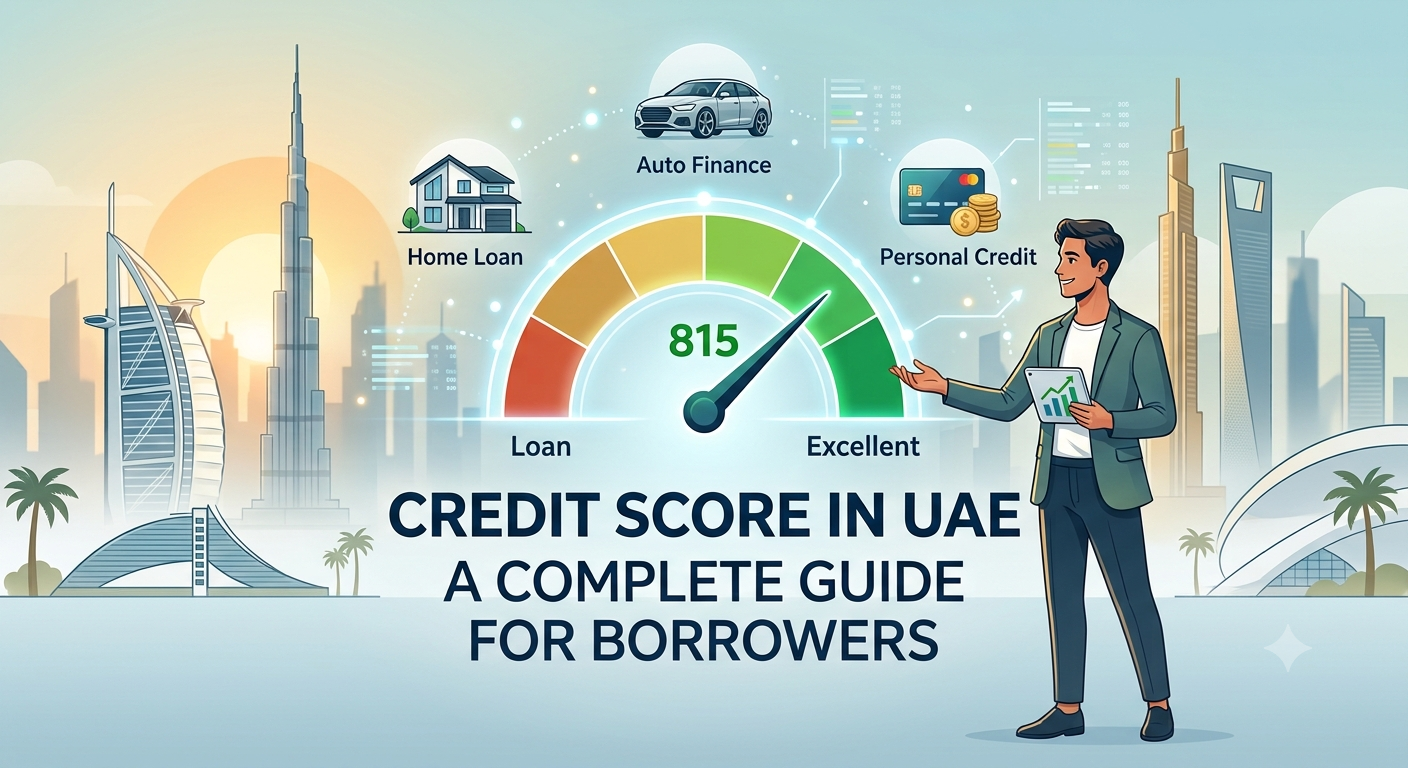
If you are planning to apply for a loan, credit card, or other financing in the UAE, you may have heard that your credit score matters. But knowing your score is only the beginning. Understanding what affects it and how lenders may view your credit profile can help you make more informed financial decisions.
Key Takeaways
- A credit score UAE provides an indication of an individual’s creditworthiness based on information in their credit history.
- Checking your credit score can help you understand your financial profile before applying for new credit.
- A good credit score UAE can support a stronger credit profile, although lenders consider several factors when assessing applications.
- Payment history, outstanding debts, and credit behaviour can affect your overall credit profile.
- Improving your credit score UAE generally requires consistent and responsible financial habits rather than a quick fix.
- The credit score required for a personal loan in UAE can vary because lenders use their own eligibility and risk-assessment criteria.
- Comparing loan terms and assessing affordability is important before taking on new borrowing.
What Is a Credit Score in the UAE?
Understanding your credit score UAE can help you prepare before seeking financing. Your credit score UAE is one useful part of your overall credit profile, while lenders may also review your income, debts, and repayment capacity.
A credit score UAE is a numerical indicator used to help assess an individual’s creditworthiness. It is based on information contained in a person’s credit history, including information related to credit facilities and repayment behaviour.
score is not the only factor lenders consider.
For example, when you apply for a personal loan, a lender may also look at your income, employment, existing financial commitments, affordability, and its own lending criteria.
Why Is Your credit score UAE Important?
A strong credit score UAE profile may make your financial history easier to assess. Monitoring your credit score UAE regularly can also help you notice changes in your credit behaviour.
Your credit score can become particularly relevant when you are planning to borrow money.
Banks and financial institutions may use credit information as part of their assessment when someone applies for:
- Personal loans
- Credit cards
- Car finance
- Home finance
- Business financing
A healthy credit profile can demonstrate a history of responsible credit management. However, having a particular score does not automatically mean that a loan application will be approved.
This is important because borrowers sometimes focus entirely on reaching a specific number. Instead, it is better to focus on maintaining responsible financial habits and making sure any new borrowing is affordable.
How to Check credit score UAE
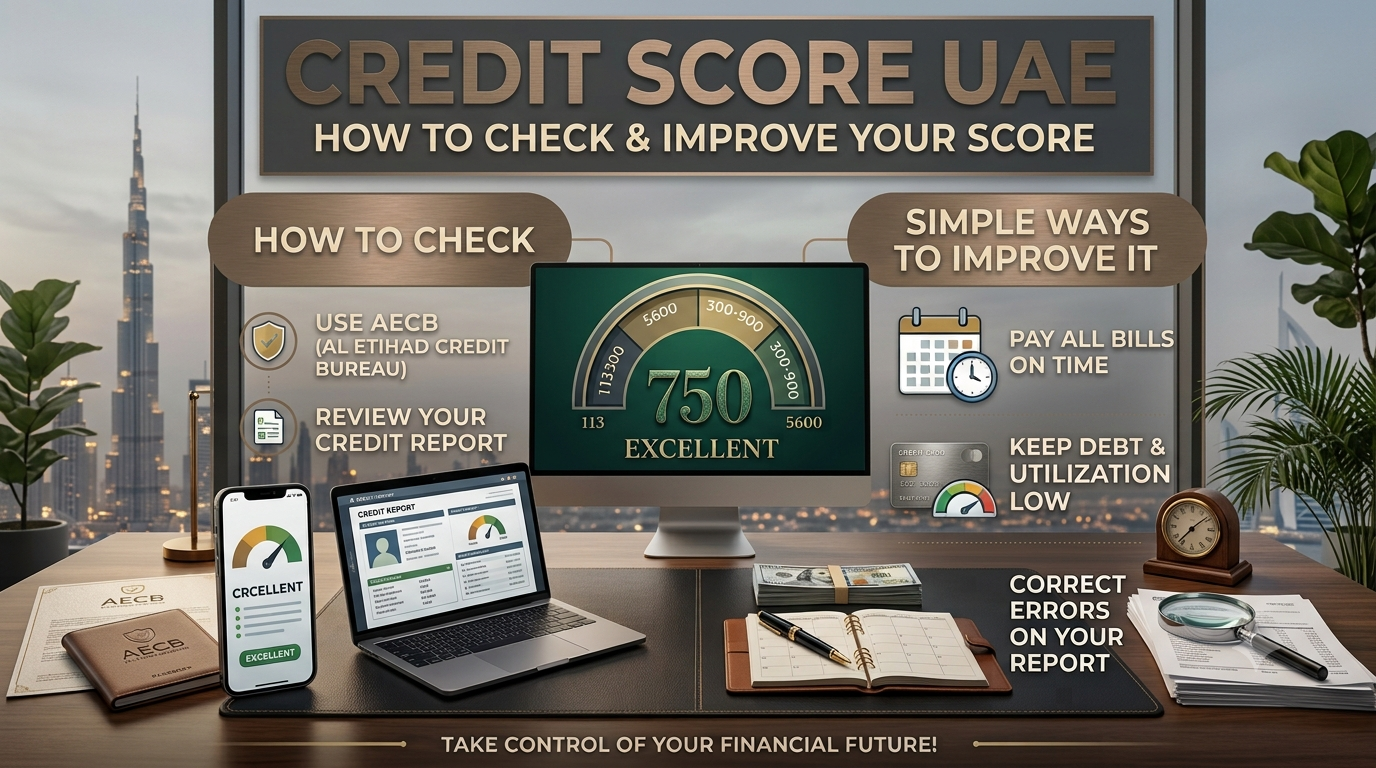
One of the most common questions borrowers have is how to check credit score UAE.
The general process involves:
- Access the official AECB service
Use the official AECB website or its authorised services to access your credit information. - Complete the required identification process
You may need to provide the information required to verify your identity and access your credit information. - Request your credit report or score
Follow the available instructions to obtain your relevant credit information. - Review your credit information
Check your accounts, outstanding balances, repayment information, and other details included in your report. - Look for unfamiliar or inaccurate information
If something appears incorrect or you do not recognise an entry, investigate it and use the appropriate official process to request clarification or correction.
Checking your credit information before applying for a loan can give you a clearer picture of your current financial position.
What Is a Good credit score UAE?
Many borrowers search for good credit score UAE because they want to know whether their score is strong enough before applying for financing.
A higher credit score generally indicates a stronger credit profile. However, there is no universal score that guarantees approval from every bank or financial institution.
Lenders can have different eligibility requirements and may consider several factors alongside your credit score.
For example, a lender may consider:
- Monthly income
- Employment status
- Existing loans
- Credit-card balances
- Current financial commitments
- Repayment capacity
- Credit history
- Internal lending policies
Therefore, instead of focusing only on whether your score is “good,” consider your complete financial situation.
What Credit Score Is Required for a Personal Loan in UAE?
The question What is the credit score required for a personal loan in UAE does not have one universal answer. Different banks and financial institutions may have different eligibility requirements and lending policies. A credit score can form part of the assessment, while lenders may also consider income, employment, existing debts, affordability, and other financial information.
If you are considering a personal loan in UAE, checking your credit information beforehand can help you understand your financial position. It is also useful to compare available loan options, interest rates, fees, repayment periods, and eligibility criteria before making a decision.
Factors Affecting Credit Score in the UAE

Payment habits are especially relevant to your credit score UAE profile. Keeping your accounts organised and reviewing your obligations can support better management of your credit score UAE.
Several aspects of your borrowing and repayment behaviour can influence your credit profile. Understanding these factors can help you manage your finances more responsibly.
| Factor |
Why It Matters |
|---|---|
| Payment History | Shows how consistently you make loan, credit-card, and other credit payments on time. |
| Outstanding Debt | Reflects your existing financial commitments and the amount of credit you currently owe. |
| Credit-Card Usage | Shows how you manage revolving credit and whether you regularly carry significant balances. |
| Credit Applications | Reflects your recent borrowing activity, including applications for new loans or credit facilities. |
| Credit History | Provides information about your past borrowing and repayment behaviour over time. |
How to Improve credit score UAE
When working on your credit score UAE, focus on sustainable financial habits rather than short-term fixes. Responsible borrowing can help you maintain a healthier credit score UAE profile over time.
If your credit profile needs improvement, there is usually no instant solution. Building better credit habits takes consistency and time.
Here are some practical steps to consider.
Pay Your Bills and Loan Instalments on Time
Late payments can create problems for your credit history. Set reminders for important payment dates and make sure you have sufficient funds available for scheduled repayments.
Manage Your Outstanding Balances
Keep track of your loans and credit-card balances. Understanding how much you owe and when payments are due can help you avoid unnecessary financial pressure.
Avoid Unnecessary Credit Applications
Before applying for another loan or credit facility, consider whether you actually need it and whether the repayments fit comfortably within your budget.
Review Your Credit Report
Regularly reviewing your credit information can help you identify information that may be incorrect or unfamiliar.
Reduce Unmanageable Debt
If you already have several financial commitments, focus on creating a realistic repayment plan rather than taking on additional unnecessary borrowing.
Build Consistent Financial Habits
Improving a credit profile is generally a long-term process. Consistent repayments and responsible use of credit are more useful than looking for quick fixes.
Verified AECB Credit Score Range
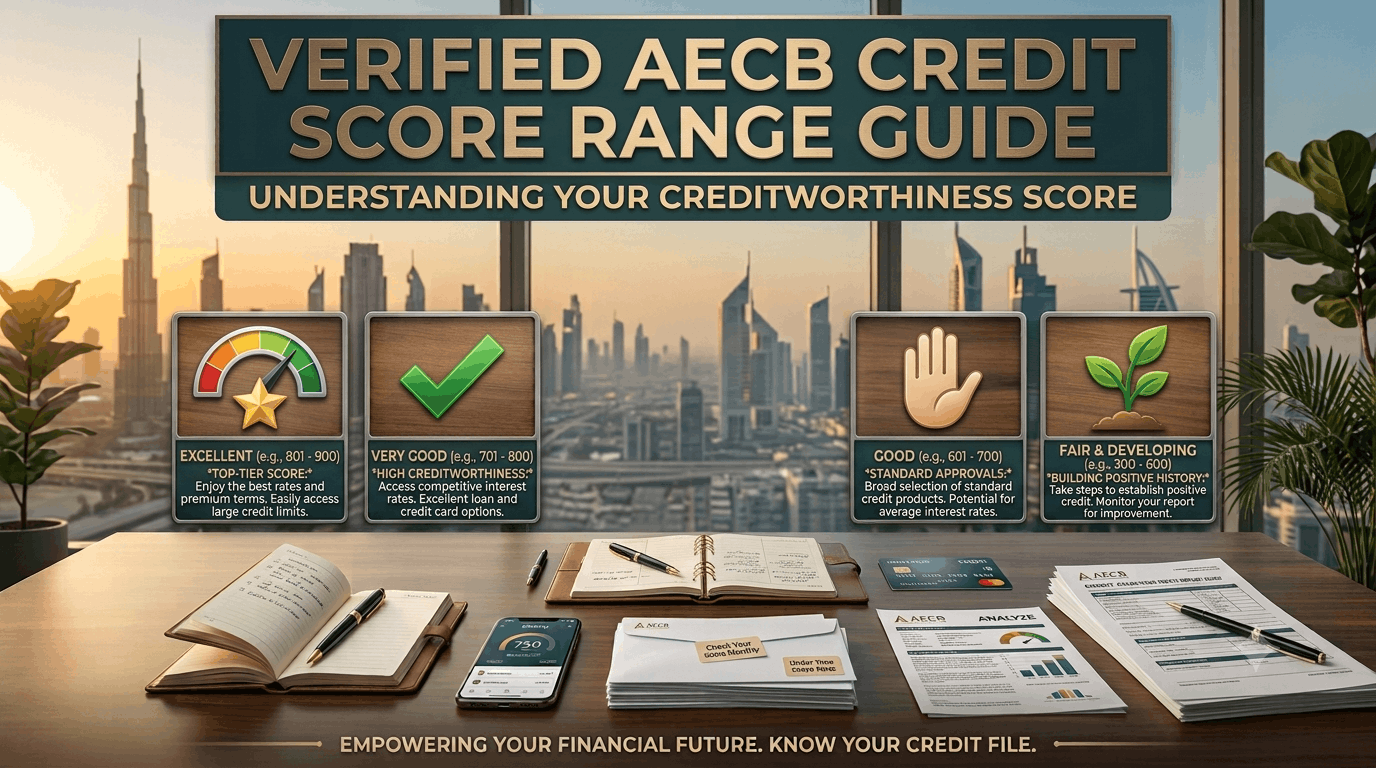
According to the Al Etihad Credit Bureau (AECB), the credit score UAE is a three-digit score ranging from 300 to 900. A higher score indicates a lower level of credit risk. AECB states that the score is generated using statistical models that consider multiple data points from a person’s credit profile.
| Credit Score Range | What It Means |
| 300–900 | The official AECB credit-score range for individuals and companies. |
| Higher score | Generally indicates a lower level of credit risk. |
| Lower score | Generally indicates a higher level of credit risk. |
How Does Your Credit Score Affect Loan Approval?
Before applying, reviewing your credit score UAE information can give you a clearer starting point. A lender may use your credit score UAE together with other financial information when assessing an application.
Your credit score can be one part of a lender’s overall assessment.
For example, imagine two people applying for similar loans. One has a history of making repayments on time, while the other has several missed payments and significant outstanding obligations. The lender may assess their applications differently.
However, credit score alone does not determine the outcome.
Lenders can also consider income, employment, existing debts, affordability, documentation, and their own lending policies.
This means improving your credit profile can be helpful, but you should also make sure that the loan you are considering is affordable.
Credit Score and Different Types of Loans in UAE
For borrowers, understanding how a credit score UAE profile may be considered across different financing products can help with better preparation.
Your credit information may be relevant when considering different types of financing.
Personal Loan
A personal loan in UAE may be used for various personal expenses. Lenders can consider credit history alongside income and repayment capacity when assessing applications.
Car Loan
When purchasing a vehicle, lenders may consider your credit profile as part of their assessment for car financing.
Home Loan
Home financing involves significant long-term financial commitments, so lenders typically assess several aspects of an applicant’s financial position.
Business Loan
Business owners may need financing for working capital, expansion, equipment, or other business requirements. Eligibility can depend on factors such as business performance, financial information, and the lender’s criteria.
Credit Score vs Credit Report in UAE
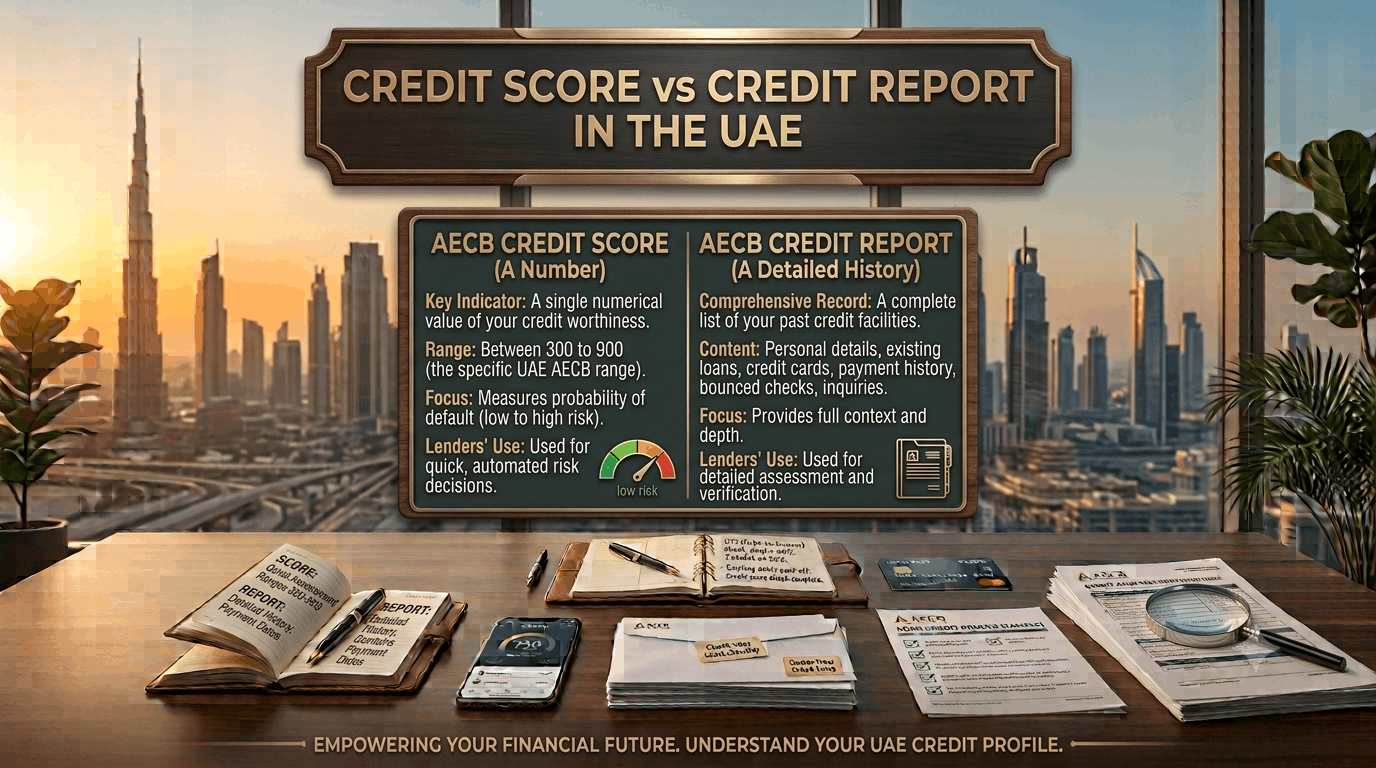
| Credit Score | Credit Report |
| A three-digit number ranging from 300 to 900. | A detailed record of your credit and financial information. |
| Indicates your overall credit risk. | Provides information about your credit history and financial obligations. |
| Gives a quick view of your creditworthiness. | Gives a detailed view of your borrowing and repayment history. |
| A higher score generally indicates lower credit risk. | Can include information such as payment history, credit contracts, bills, and financial obligations. |
| Useful for getting a quick understanding of your credit profile. | Useful for reviewing your credit information and identifying unfamiliar or potentially inaccurate details. |
| Credit score = a number. | Credit report = detailed credit information. |
Practical Example: Preparing to Apply for a Loan
Checking your credit score UAE before submitting an application can help you understand your starting position.
Suppose you are planning to apply for a personal loan in the UAE.
Instead of immediately submitting applications to several lenders, you could first:
- Check your credit information.
- Review your existing loans and credit-card balances.
- Check your monthly income and expenses.
- Calculate how much additional repayment you can realistically manage.
- Compare available loan terms and fees.
- Check the lender’s eligibility requirements.
- Apply only after understanding the repayment commitment.
This approach can help you make a more informed borrowing decision.
What Should You Do Before Applying for a Loan?
Reviewing your credit score UAE alongside your budget and existing financial commitments can help you make a more informed borrowing decision. Before applying, it is important to understand not only whether you may qualify, but also whether the loan will be comfortable to repay.
Before submitting a loan application, consider the following:
- Check your credit information: Review your credit report and credit score UAE to understand your current credit profile and identify any information that may need attention.
- Review existing financial obligations: Look at your current loans, credit-card balances, bills, and other regular commitments. This helps you understand how much of your income is already committed.
- Check your monthly budget: Calculate your regular income and expenses to determine how much money you have available after essential costs.
- Understand the proposed monthly repayment: Don’t focus only on the amount you want to borrow. Make sure the expected monthly instalment fits comfortably within your budget.
- Compare interest rates and fees: Different personal loan in UAE options may have different rates, processing fees, repayment periods, and other charges. Comparing these can help you identify a more suitable option.
- Review eligibility criteria: Check factors such as income requirements, employment conditions, documentation, and credit requirements before applying.
- Avoid borrowing more than you can comfortably repay: A larger loan may provide more funds initially, but it can also mean higher monthly payments and a greater overall financial commitment. Choose an amount that you can realistically repay without putting unnecessary pressure on your finances.
Taking these steps before applying can help you approach a personal loan in UAE with a clearer
Conclusion
Keeping track of your credit score UAE and maintaining responsible borrowing habits can support better financial planning.
Your credit score UAE profile can play an important role when you are considering borrowing, but it is only one part of the bigger financial picture. Understanding your credit history, checking your information, and developing responsible repayment habits can put you in a better position when exploring financing.
Whether you are looking for a personal loan in UAE, car finance, home finance, or business funding, take time to understand your options and choose borrowing that fits your financial circumstances.
FAQs
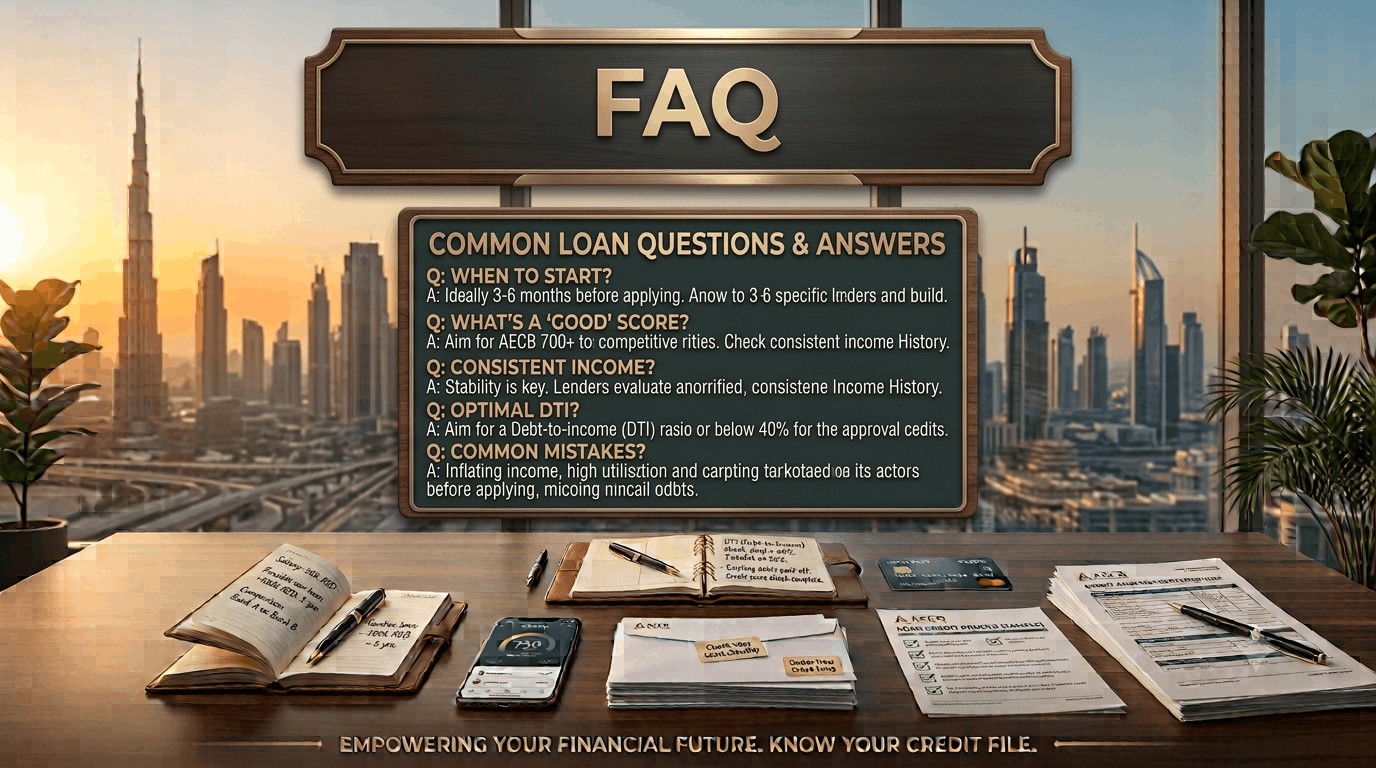
1-How can I check my credit score in UAE?
Answer: You can check your credit information through the official services of the Al Etihad Credit Bureau (AECB). The available process may require identity verification and payment of applicable service fees.
2-What is a good credit score in UAE?
Answer: A higher credit score generally indicates a stronger credit profile, but there is no single score that guarantees approval from every lender. Financial institutions may use different eligibility and risk-assessment criteria.
3-What is the credit score required for a personal loan in UAE?
Answer: There is no universal credit score required for every personal loan in the UAE. Lenders can consider credit history alongside income, employment, existing financial obligations, affordability, and their internal policies.
4- How can I improve my credit score in UAE?
Answer: You can work toward a healthier credit profile by making repayments on time, managing outstanding balances responsibly, avoiding unnecessary borrowing, and regularly reviewing your credit information.
5- Does a good credit score guarantee loan approval in UAE?
Answer: No. A good credit score can be helpful, but loan approval depends on several factors and the lender’s eligibility requirements.
6- Does checking my credit score affect my credit score?
Answer: Checking your own credit information is different from repeatedly applying for new credit. Before checking or applying, review the current guidance provided by the relevant credit-information provider.
7- How do late payments affect my UAE credit score?
Answer: Late or missed payments can negatively affect your credit history and may influence your overall credit profile. Making payments on time is an important part of responsible credit management.
8- What factors affect my credit score in the UAE?
Answer: Your credit profile can be influenced by factors such as payment history, outstanding debts, credit utilisation, the length of your credit history, and applications for new credit. Maintaining responsible borrowing and repayment habits can help support a healthier credit profile.
9- How often should I check my credit score in the UAE?
Answer: rate information or unexpected changes in your credit profilIt is a good idea to review your credit information periodically, especially before applying for a major financial product such as a personal loan, credit card, or mortgage. Regular reviews can help you identify inaccue.
10- Can I get a loan in the UAE with a low credit score?
Answer: Having a lower credit score may make borrowing more difficult, but it does not necessarily mean every lender will reject your application. Lenders may also consider your income, employment, existing debts, repayment history, and overall affordability when assessing a loan application.